
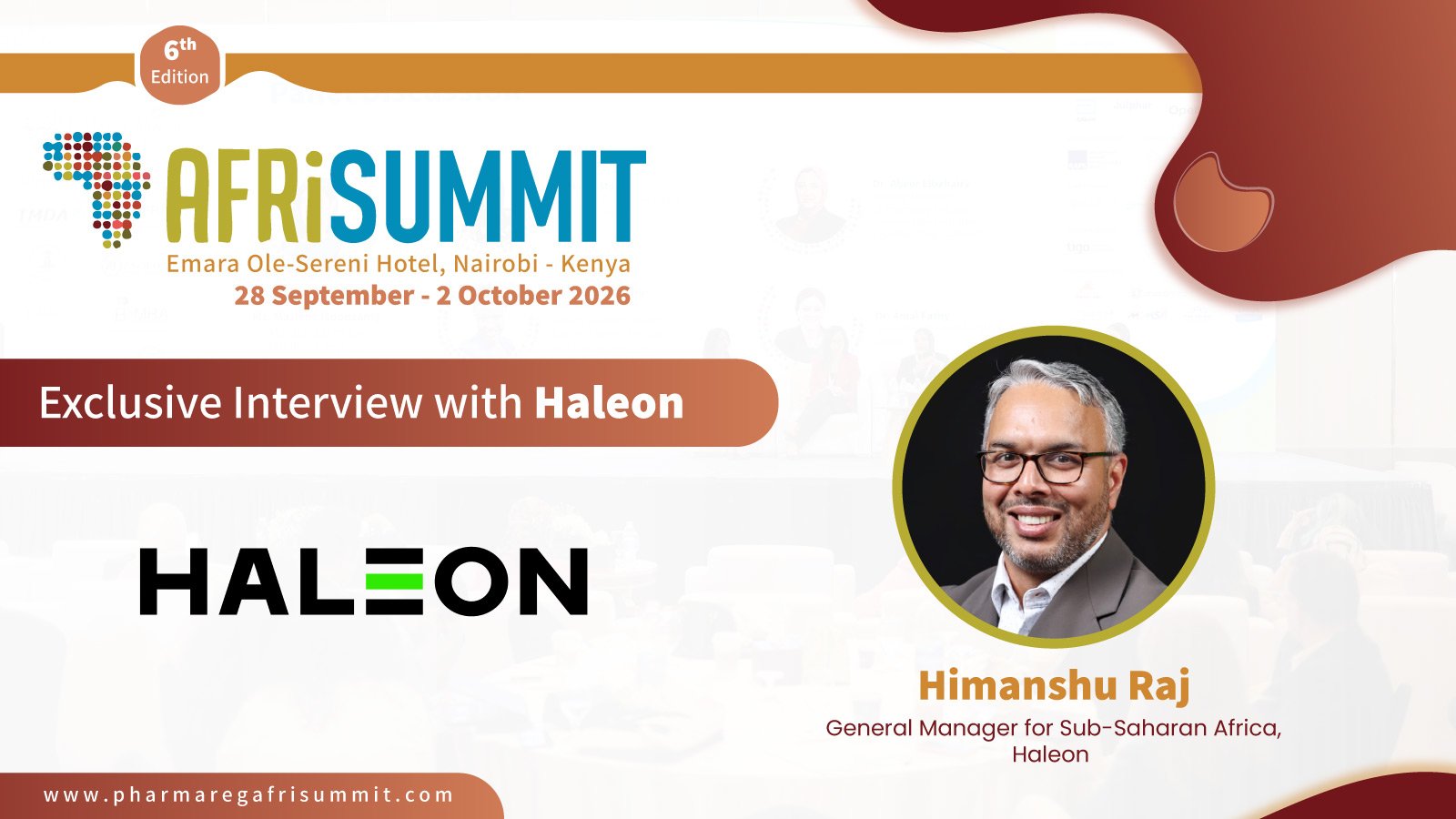
As healthcare systems across Africa respond to growing demand, responsible self-care has an increasingly important role to play in helping people manage everyday health needs while staying connected to appropriate professional care.
Ahead of AfriSummit 2026, we spoke with Himanshu Raj, General Manager for Sub-Saharan Africa at Haleon, about the opportunity to strengthen self-care through better health literacy, more predictable regulatory pathways and closer collaboration between industry, regulators and healthcare professionals.
Question 1: Across Africa, where do you see the biggest untapped opportunity for self-care to improve health outcomes and ease pressure on healthcare systems?
The biggest untapped opportunity is to make responsible self-care a stronger first mile of healthcare. People are already managing everyday health needs at home, using pharmacies and in communities; the real opportunity is to make those decisions safer, better informed and more connected to professional care.
That matters because African health systems are carrying growing demand, stretched workforces and rising everyday health needs. Responsible self-care does not replace doctors or pharmacists; it helps people act earlier, use trusted products correctly and know when to seek guidance.
The evidence is clear: Haleon’s Health Inclusivity Index found that improving health literacy by 25% across 40 countries could unlock an estimated US$302.7 billion in annual healthcare savings. For me, that shows health literacy is not a communications add-on; it is health-system infrastructure.
Haleon’s role is to help make that first mile more trusted by combining products that are backed by science, local operating insight, health-literacy partnerships and collaboration with regulators and healthcare professionals.
Question 2: What is one regulatory or policy change that could improve access to consumer health products across Africa?
The single most important change is greater predictability in approval pathways, without compromising quality or safety. For consumer health, speed matters because delays affect products people use for everyday needs; safety matters because trust is what makes self-care possible.
That is why I describe the opportunity as “speed with safety.” It is not deregulation. It is about rigorous standards, clearer timelines, more transparent communication and better use of regulatory capacity.
Practical progress can come through reliance, recognition, digital systems and harmonised approaches that reduce duplication while preserving strong national and regional oversight. Done well, these tools help industry focus on the highest-value work and help responsible companies plan supply more effectively. For Haleon Kenya, this is not theoretical. Our Nairobi manufacturing footprint and regional supply role shows why predictable regulation, quality systems and timely access need to work together if trusted everyday-health products are to reach consumers responsibly.
Question 3: What value do forums like AfriSummit offer by bringing regulators, policymakers and industry together in one place?
The value of AfriSummit is that it brings the right actors into one room to solve shared problems. Regulators, policymakers and industry each hold part of the answer on access, quality, product integrity and health literacy.
For me, the most important value is trust-building. When regulators and industry engage early and constructively, it becomes easier to modernise processes, address risks and build systems that protect people while improving access.
That collaboration is especially important for responsible self-care. No single company or regulator can improve health literacy, stop counterfeits, strengthen supply chains or harmonise regulation alone.
AfriSummit gives us a platform to move from broad agreement to practical action: clearer pathways, stronger cooperation, better intelligence-sharing and shared responsibility for the consumers and patients these systems ultimately serve.
Strengthening responsible self-care requires more than access to products. It depends on informed consumers, trusted healthcare guidance, strong regulatory systems and collaboration across the wider health ecosystem.
As Himanshu Raj highlights, bringing these perspectives together can help move conversations around access, health literacy and regulatory modernisation towards practical action, while keeping quality, safety and consumer trust at the centre.
These discussions will continue at AfriSummit 2026, where regulators, policymakers, industry and healthcare stakeholders will come together to exchange perspectives on the evolving regulatory environment across Africa.
Haven’t registered yet? You can still attend in-person or virtually. Click here to book your seat.